1. Introduction — When modafinil isn’t the right fit
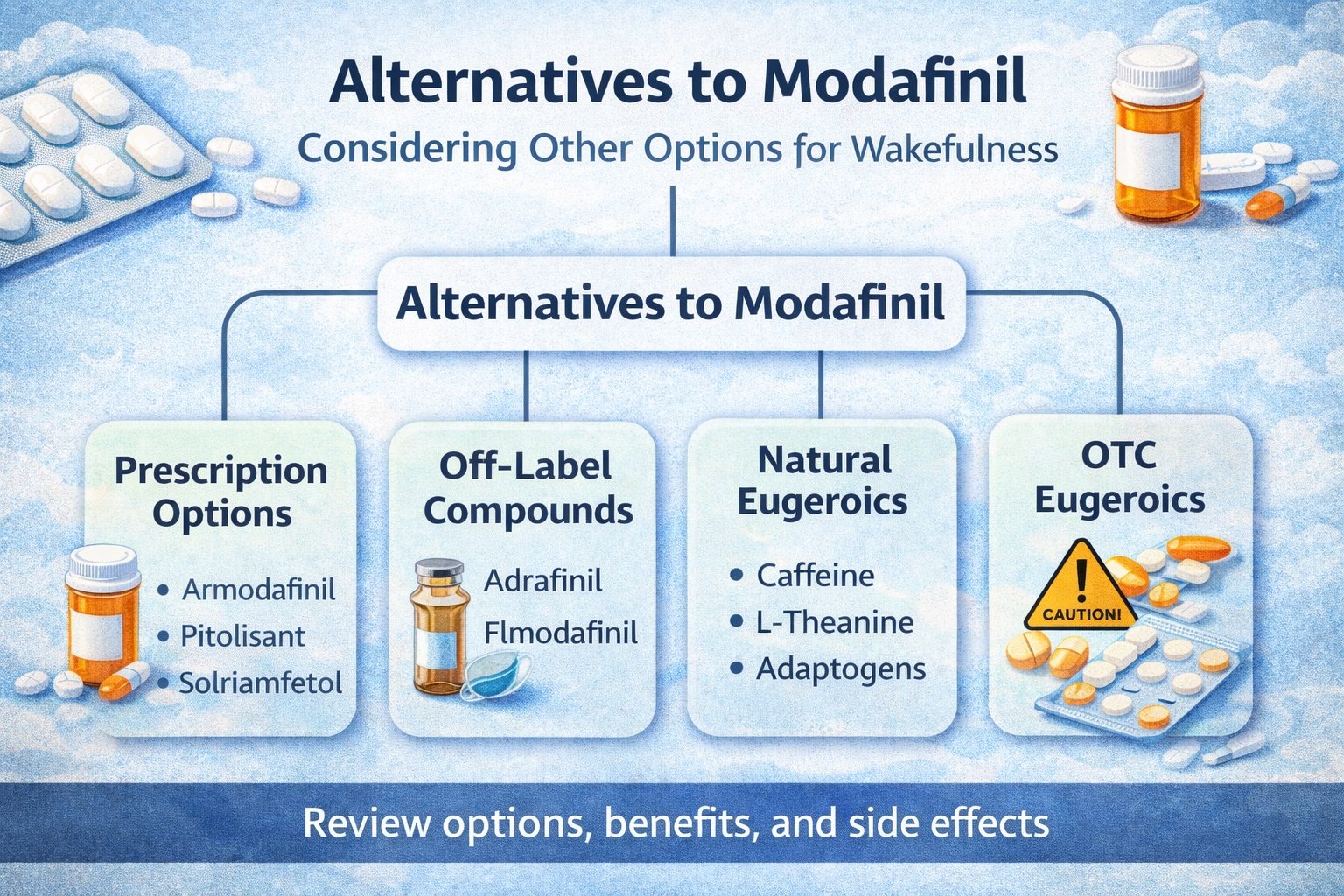
Modafinil is widely known as a wake-promoting medication, but it is not ideal for everyone. Some patients experience inadequate benefit, others develop intolerable side effects, and many simply cannot access it due to cost or regulatory barriers. In clinical settings, physicians often observe that the need for sustained alertness can arise from very different causes. As a result, alternatives to modafinil span prescription medications, off-label strategies, and non-prescription approaches—each with distinct mechanisms and trade-offs.
2. Definitions & mechanisms — what counts as an “alternative”?
An alternative to modafinil is not defined by chemical similarity alone. Instead, it refers to any intervention that meaningfully improves wakefulness, vigilance, or cognitive endurance without relying on the same pharmacological profile.
Unlike classical Stimulants, modafinil primarily affects dopamine signaling indirectly while influencing histamine, orexin, and glutamate pathways. Many alternatives target these same systems through different entry points, explaining why patients may respond better to one agent than another.
3. Prescription alternatives to modafinil with clinical backing
Armodafinil
Armodafinil is the R-enantiomer of modafinil and is often prescribed when modafinil produces uneven effects or wears off too quickly. Clinically, it tends to last longer and produce a smoother alertness curve.
From a pharmacokinetic standpoint, armodafinil’s slower clearance may benefit patients who struggle with afternoon sleepiness. However, its side-effect profile largely mirrors modafinil, including headache and insomnia.
Pitolisant
Pitolisant represents a mechanistically distinct alternative. Rather than acting on dopamine transporters, it increases histamine release by antagonizing H3 receptors.
This difference matters clinically. According to the U.S. Food and Drug Administration’s narcolepsy reviews, pitolisant avoids traditional stimulant properties and may be preferred in patients with anxiety or substance-use concerns (FDA.gov).
Solriamfetol
Solriamfetol occupies a middle ground between eugeroics and stimulants. It enhances dopamine and norepinephrine reuptake inhibition more directly than modafinil.
In practice, clinicians often reserve solriamfetol for patients with severe excessive daytime sleepiness who have not responded to first-line therapies. Blood pressure monitoring is typically advised, as noted in NIH-supported sleep medicine literature (NIH.gov).
4. Off-label and next-generation compounds
Adrafinil
Adrafinil is a prodrug converted into modafinil by the liver. It is sometimes used where modafinil is inaccessible, though this conversion introduces additional metabolic strain.
Physicians generally caution against chronic use due to potential liver enzyme elevation. For this reason, adrafinil is best viewed as a situational rather than long-term alternative.
Fluorenol and flmodafinil
Compounds such as Fluorenol and Flmodafinil are often described as “next-generation” eugeroics. Data remain limited, and they lack formal regulatory approval.
From a scientific standpoint, these agents highlight ongoing interest in refining wakefulness without overstimulation. Clinically, however, most physicians advise caution due to sparse human safety data.
5. Non-prescription and lifestyle-oriented alternatives
Natural eugeroics
Some patients explore Natural eugeroics such as caffeine-L-theanine combinations, adaptogens, or structured light exposure. While effects are modest, they may complement medical therapy.
Importantly, these options rarely replicate modafinil’s potency. Their value lies in sustainability and lower risk rather than raw wakefulness.
OTC eugeroics
A growing market of OTC eugeroics claims modafinil-like benefits. Evidence varies widely, and quality control is inconsistent.
Clinicians frequently remind patients that “over-the-counter” does not mean “risk-free,” particularly when products contain undisclosed stimulants.
6. Comparisons: alternatives to modafinil
| Feature | Modafinil | Pitolisant | Solriamfetol |
|---|---|---|---|
| Stimulant-like effects | Low | Minimal | Moderate |
| Abuse potential | Low | Very low | Low–moderate |
| Blood pressure impact | Minimal | Minimal | Possible |
| Regulatory status (US) | Prescription | Prescription | Prescription |
For broader comparisons, readers may consult the Eugeroic drug list, which categorizes wake-promoting agents by mechanism and approval status.
7. Risks and side effects
All pharmacologic alternatives carry potential risks. Headache, nausea, anxiety, and sleep disruption are common across many agents, though severity varies.
A balanced discussion of risks is essential, and readers are encouraged to review consolidated safety profiles such as those outlined under Side effects. Individual risk assessment should always involve a qualified Doctor.
8. Use-case driven selection
In practice, the “best” alternative depends on context. Patients with narcolepsy may prioritize sustained alertness, while those seeking to Get work done may value cognitive endurance over raw stimulation.
Athletes and shift workers raise additional considerations, particularly around fairness and regulation, which is why some discussions intersect with Sports medicine ethics.
9. Regulatory notes and access
In the United States, prescription alternatives are regulated and require clinical justification. Regulatory agencies such as the FDA emphasize diagnosis-specific use, particularly for sleep disorders.
By contrast, online listings—sometimes grouped under resources like Modafinil vendors—vary widely in legality and safety. Regulatory agencies including the World Health Organization stress the importance of verified supply chains (WHO.int).
10. Conclusion — choosing wisely
Alternatives to modafinil are not one-size-fits-all. From histamine-based agents like pitolisant to lifestyle-oriented strategies, the spectrum is broad and clinically nuanced.
For patients exploring options, informed discussion with a clinician remains the safest path forward. Those seeking contextual comparisons may also reference the Eugeroic drug list or educational resources discussing access pathways.