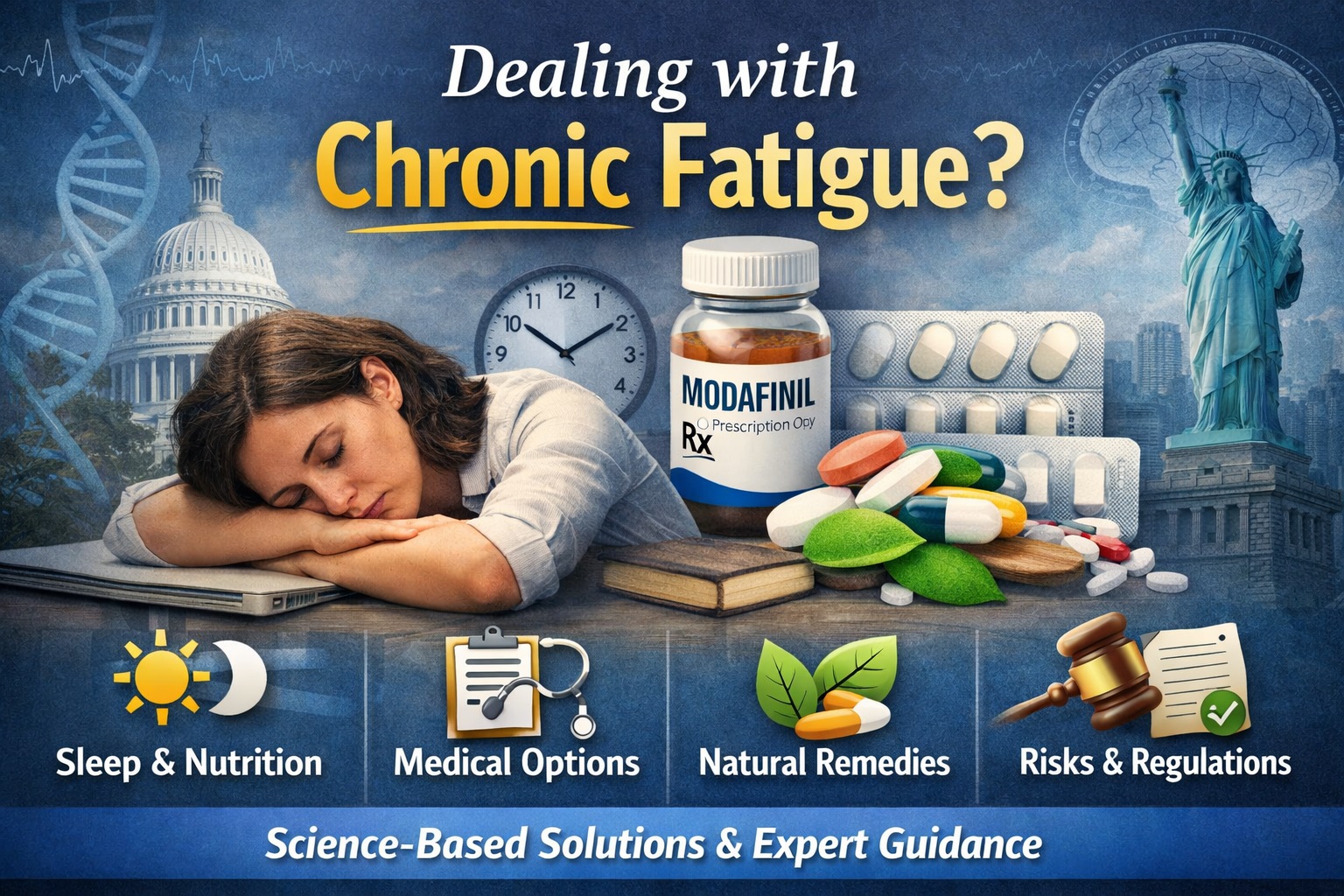
Chronic fatigue is more than just feeling tired after a long day. For many people, it is a persistent, overwhelming lack of energy that does not fully improve with rest and can quietly erode work, relationships, and quality of life.
In clinical conversations, patients often describe it as “running on empty” no matter how much they sleep. Understanding what helps with chronic fatigue requires separating myths from evidence, and short-term fixes from sustainable strategies.
This article explores what science, medicine, and real-world clinical practice suggest can meaningfully help—while also being honest about limitations and risks.
Understanding Chronic Fatigue: Definitions and Mechanisms
Chronic fatigue is a symptom, not a diagnosis. It appears across many conditions, including sleep disorders, autoimmune diseases, depression, post-viral syndromes, and metabolic or hormonal imbalances.
At a biological level, fatigue often reflects disruptions in:
- Sleep–wake regulation (circadian rhythm and neurotransmitters)
- Energy metabolism (mitochondrial and glucose pathways)
- Inflammatory signaling (cytokines affecting the brain)
- Neurotransmitter balance, especially dopamine, norepinephrine, and histamine
In some patients, especially those with myalgic encephalomyelitis/chronic fatigue syndrome (ME/CFS), these systems appear to be chronically dysregulated rather than temporarily stressed.
Why Fatigue Persists Even With “Healthy Habits”
People with chronic fatigue are often told to “sleep more,” “exercise,” or “reduce stress.” While these matter, they are rarely sufficient on their own.
In real-world practice, clinicians observe that:
- Extra sleep may not restore alertness
- Exercise can worsen symptoms in some patients
- Motivation is present, but neurological energy is not
This gap between effort and outcome is why fatigue can feel invalidating—and why targeted interventions sometimes become necessary.
Lifestyle Foundations That Actually Help
Before discussing medications, it is important to acknowledge interventions with the strongest safety profiles.
Sleep Optimization (Not Just Sleep Duration)
Consistent wake times, light exposure in the morning, and limiting late-night screen use can stabilize circadian signaling. This matters because alertness is not purely about hours slept, but sleep timing and quality.
Nutritional Adequacy
Iron deficiency, B12 deficiency, and insufficient protein intake are common, overlooked contributors. Addressing these does not “cure” fatigue, but it can remove hidden brakes on energy.
Activity Pacing
For individuals with post-viral or ME/CFS-type fatigue, pacing—rather than pushing—helps prevent crashes. This approach is supported by patient-reported outcomes and growing research interest from the NIH.
When Lifestyle Measures Are Not Enough
For a subset of patients, fatigue remains disabling despite optimal habits. This is where clinicians may consider pharmacological strategies, often off-label.
These approaches are not about “boosting” energy artificially, but about improving wakefulness signaling in the brain.
Eugeroics and Wakefulness-Promoting Agents
Eugeroics are a class of medications designed to promote alertness without the classic overstimulation seen with traditional stimulants. A comprehensive overview is available in the Eugeroic drug list.
Commonly Discussed Options
These agents act through different neurochemical pathways—dopamine reuptake inhibition, histamine activation, or norepinephrine signaling—to improve wakefulness.
In clinical settings, physicians sometimes prescribe these off-label for fatigue associated with neurological or sleep-related conditions, while carefully monitoring response.
How Eugeroics Differ From Traditional Stimulants
Unlike classic Stimulants, eugeroics tend to:
- Produce less jitteriness
- Have lower abuse potential
- Cause fewer rebound crashes
For comparison, drugs like Adderall act broadly on dopamine and norepinephrine and may worsen anxiety or sleep over time.
This distinction is why some patients tolerate eugeroics better for long-term fatigue management.
Natural and Over-the-Counter Alternatives
Not everyone needs or wants prescription medication.
Some patients explore Natural eugeroics or OTC eugeroics, which may include compounds that support alertness more gently.
Evidence here is mixed. While some supplements modestly improve perceived energy, they rarely match prescription agents in consistency or magnitude.
Clinical Insights From Practice
In practice, clinicians emphasize three principles:
- Fatigue has multiple drivers—no single solution fits all.
- Response varies widely between individuals.
- Monitoring matters, especially when medications are involved.
Doctors often start with the lowest effective dose and reassess regularly, particularly if the goal is to help patients function at work, care for family, or simply Get work done without worsening symptoms.
Consultation with a qualified Doctor is essential before any pharmacologic approach.
Risks and Side Effects
Even well-tolerated agents carry risks. Reported Side effects can include:
- Headache
- Anxiety or irritability
- Insomnia
- Appetite changes
Rare but serious reactions have been documented and are monitored by regulators such as the FDA and MHRA.
This risk–benefit balance should always be individualized.
Use Cases and Comparisons
| Approach | Best For | Limitations |
|---|---|---|
| Sleep & pacing | Mild to moderate fatigue | Slow improvement |
| Nutritional correction | Deficiency-related fatigue | Limited impact if labs are normal |
| Eugeroics | Neurological or sleep-related fatigue | Prescription, monitoring required |
| Traditional stimulants | Short-term severe impairment | Higher side-effect burden |
Some patients explore combinations discussed in resources like Modafinil and Pitolisant or Solriamfetol and Pitolisant, though such strategies require careful oversight.
Regulatory and Legal Considerations
In the United States, most eugeroics are prescription-only and approved for specific sleep disorders. Off-label use for fatigue is legal but regulated.
Patients should avoid unverified sources and be cautious with online purchasing, even when researching topics like Modafinil vendors. Regulatory agencies emphasize safety, quality control, and appropriate prescribing.
Conclusion: What Truly Helps Chronic Fatigue?
Dealing with chronic fatigue is rarely about a single fix. Meaningful improvement usually comes from layering strategies—addressing sleep, nutrition, pacing, and when appropriate, targeted pharmacology.
For some, lifestyle changes are enough. For others, carefully selected wakefulness-promoting agents provide a functional bridge back to daily life. The key is evidence-based decision-making, realistic expectations, and professional guidance.
For readers seeking deeper comparisons, the resource on the Best eugeroic and information on how to buy modafinil responsibly may be helpful starting points for informed discussion with a clinician.