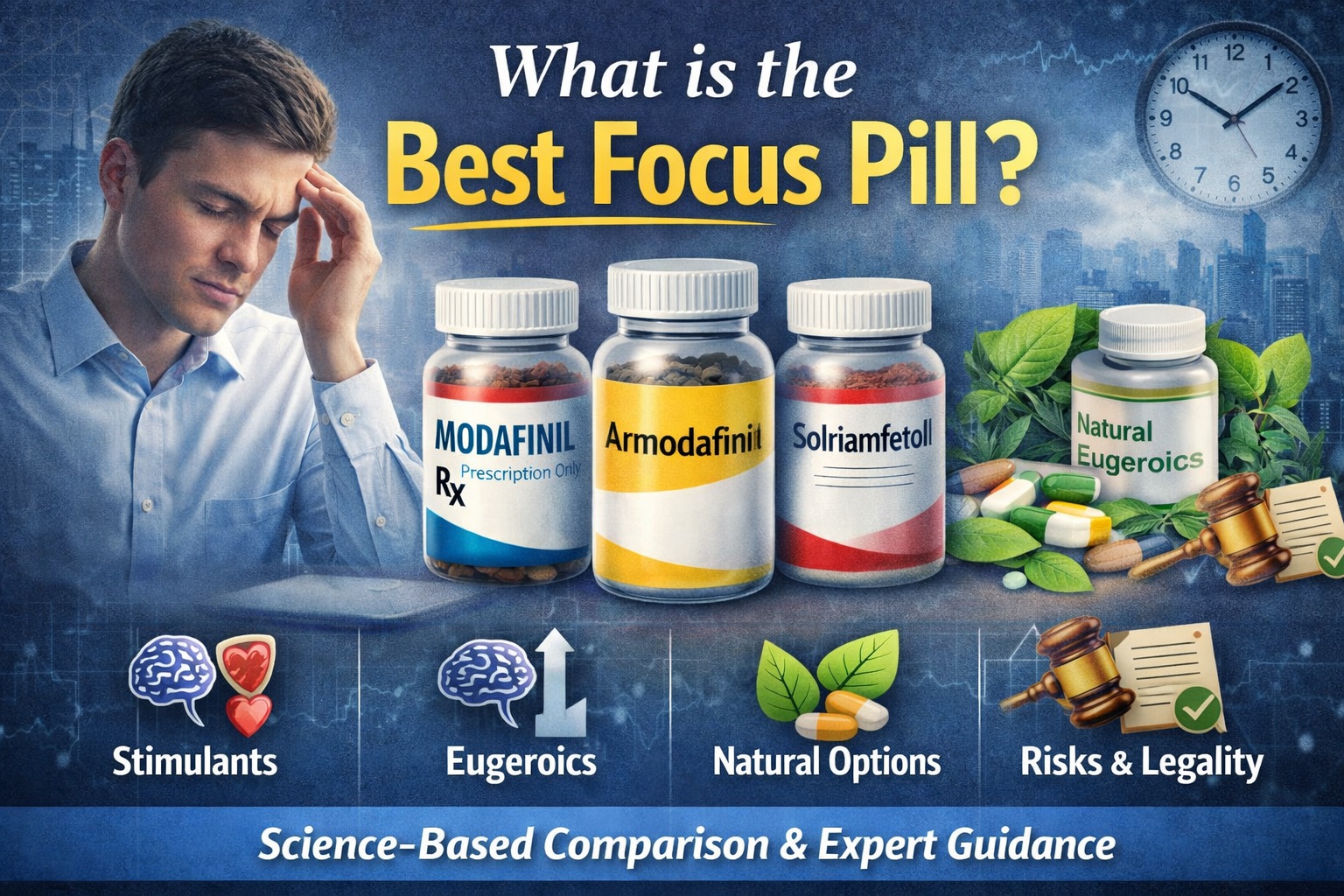
“Focus” is a deceptively simple word. In everyday life, it can mean sustained attention during work, mental clarity under pressure, or the ability to resist distraction when energy runs low. For many adults, especially knowledge workers and students, the search for the best focus pill is less about peak performance and more about staying functional—thinking clearly, finishing tasks, and avoiding mental fatigue. This article explores what science, clinicians, and regulators actually say about focus-enhancing pills, with an emphasis on safety, realism, and evidence.
Definitions and Mechanisms: What Improves Focus?
Focus is regulated by several interconnected brain systems, particularly those involving dopamine, norepinephrine, histamine, and sleep–wake signaling. When these systems are balanced, attention feels effortless. When they are not, concentration becomes fragile.
Broadly, focus-enhancing pills fall into three categories:
- Stimulants that increase neurotransmitter release
- Eugeroics that promote wakefulness and alertness
- Natural or OTC compounds that support cognition more subtly
Understanding these differences is critical, because “stronger” does not always mean “better.”
What Are Eugeroics, and Why Are They Central to Focus?
Eugeroics are wakefulness-promoting agents originally developed for sleep disorders, but they have become central to discussions about focus and productivity. A full overview is available in the Eugeroic drug list.
Unlike classical stimulants, eugeroics tend to:
- Support sustained attention
- Produce less emotional “push”
- Reduce mental fatigue rather than force alertness
This distinction explains why many clinicians view them differently from traditional ADHD medications.
Modafinil and Related Focus Pills
Modafinil
Among prescription options, Modafinil is often cited as a leading candidate for the “best focus pill.” Pharmacologically, it acts on dopamine transporters while also influencing orexin and histamine pathways, which help regulate wakefulness.
In clinical settings, physicians often observe that modafinil improves task persistence and mental clarity more than raw speed. Patients describe feeling “awake but calm,” rather than stimulated.
For readers researching access, information on how to buy modafinil responsibly is essential, especially given regulatory and quality concerns.
Armodafinil
Armodafinil is the longer-acting enantiomer of modafinil. Its effects tend to last longer into the day, which may benefit individuals with extended work hours but can interfere with sleep if poorly timed.
Adrafinil
Adrafinil is a prodrug converted into modafinil in the liver. It is sometimes discussed as an alternative, but clinicians are cautious due to potential liver strain with frequent use.
Pitolisant and Solriamfetol
Newer agents such as Pitolisant and Solriamfetol work through different mechanisms—histamine activation and dopamine/norepinephrine reuptake inhibition, respectively.
These drugs are primarily prescribed for narcolepsy, but they are increasingly discussed in focus-related contexts, especially when fatigue is a major driver.
How Eugeroics Compare to Stimulants
Traditional stimulants, including Adderall, can significantly improve attention in diagnosed ADHD. However, they act by aggressively increasing dopamine and norepinephrine.
Compared with eugeroics:
- They often feel more intense
- They carry higher abuse potential
- Side effects such as anxiety and appetite loss are more common
This is why many non-ADHD users seek alternatives to classic Stimulants.
Natural and Over-the-Counter Focus Pills
Not everyone needs prescription medication. Some readers explore Natural eugeroics or OTC eugeroics to support attention more gently.
These may help with:
- Mild brain fog
- Stress-related distraction
- Low-grade mental fatigue
However, evidence is less robust, and effects are usually modest compared to prescription agents.
Clinical Insights: What Doctors Actually See
From a clinician’s perspective, the “best focus pill” depends on why focus is impaired.
Doctors often observe:
- Fatigue-driven inattention responds better to eugeroics
- Anxiety-driven distraction may worsen with stimulants
- Sleep deprivation undermines all pharmacological strategies
This is why consultation with a qualified Doctor is critical before using any focus-enhancing medication.
Risks and Side Effects
No focus pill is risk-free. Reported Side effects across these classes include:
- Headache
- Insomnia
- Anxiety or irritability
- Elevated heart rate
Rare but serious reactions are tracked by regulatory agencies such as the FDA and MHRA.
Balanced decision-making means weighing functional benefit against these risks.
Use Cases, Comparisons, and Alternatives
| Scenario | Often Considered |
|---|---|
| Long workdays | Modafinil, armodafinil |
| Severe daytime sleepiness | Solriamfetol, pitolisant |
| Stress-related focus loss | Natural options |
| ADHD diagnosis | Prescription stimulants |
Some users explore combinations discussed in resources like Modafinil and Pitolisant or Solriamfetol and Pitolisant, but such approaches require medical oversight.
Regulatory Notes and Legal Status
In the United States, most prescription focus pills are approved for specific indications such as narcolepsy or ADHD. Off-label use for focus is legal but regulated.
Regulators including the NIH and WHO emphasize careful prescribing, informed consent, and avoidance of non-verified supply chains. Caution is especially important when researching online sources or Modafinil vendors.
Conclusion: Is There a Single “Best” Focus Pill?
There is no universal best focus pill—only the best fit for a specific person and context. For many adults, eugeroics offer a middle ground between nootropics and stimulants, supporting sustained attention without excessive stimulation.
Used thoughtfully, alongside sleep, nutrition, and workload management, these agents can help people function, concentrate, and ultimately Get work done more consistently.
Readers seeking comparisons may find the guide to the Best eugeroic helpful as a next step.