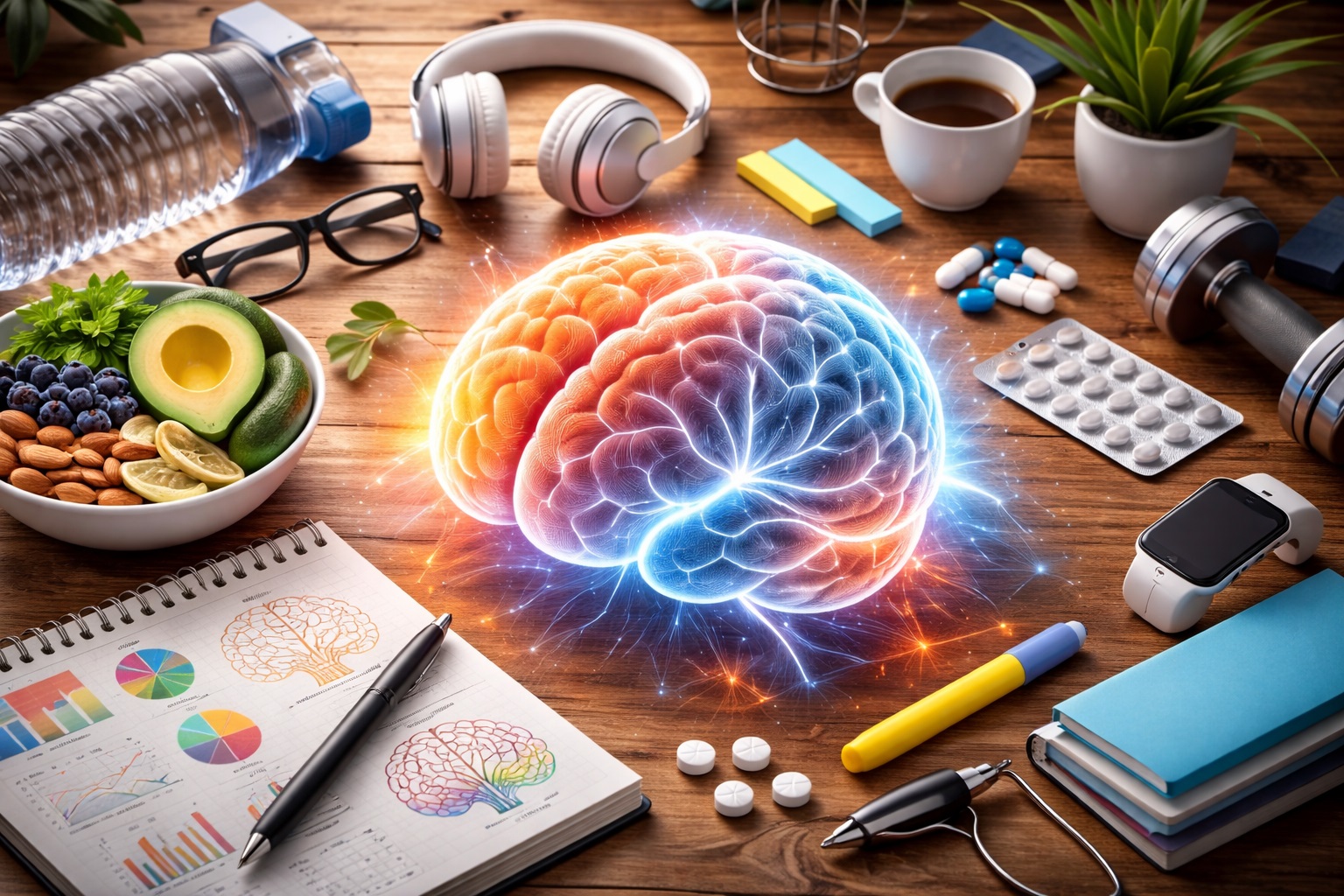
Peak mental performance rarely comes from a single trick. Instead, it emerges from a constellation of habits that stabilize attention, protect brain energy, and sharpen decision-making.
In clinical and occupational settings—from surgeons in operating rooms to analysts managing complex data—physicians often observe that sustained cognitive performance depends on structured routines rather than bursts of motivation.
This article explores the neuroscience behind mental performance and the practical habits that help people maintain clarity, focus, and productivity.
Understanding Peak Mental Performance
Peak mental performance refers to a state where attention, memory, decision-making, and motivation operate efficiently for extended periods.
Neurologically, this involves several systems working in synchrony:
- Prefrontal cortex – executive function and planning
- Dopamine pathways – motivation and reward signaling
- Orexin and histamine systems – wakefulness and vigilance
- Circadian rhythms – biological timing of energy cycles
Sleep deprivation, metabolic instability, or chronic stress disrupt these systems quickly. Even mild sleep loss can reduce cognitive accuracy and reaction time.
According to the National Institutes of Health, sleep loss directly impairs attention networks and executive functioning in the brain.
https://www.nih.gov
The good news: behavioral habits can stabilize these systems and significantly improve mental output.
The Foundations of Cognitive Energy
Before discussing advanced strategies, it helps to understand the three pillars of mental performance:
| Pillar | Why It Matters | Practical Habit |
|---|---|---|
| Sleep | Restores neurotransmitters and memory pathways | Maintain consistent sleep timing |
| Nutrition | Stabilizes glucose and neurotransmitter synthesis | Balanced meals with protein and micronutrients |
| Movement | Increases cerebral blood flow | Daily aerobic activity |
These pillars are often overlooked, yet they determine how effectively the brain uses higher-level cognitive tools.
Habit 1: Protect Sleep Like a Cognitive Asset
Sleep is the most powerful cognitive enhancer available.
During deep sleep stages, the brain performs several essential functions:
- Clears metabolic waste via the glymphatic system
- Consolidates memory and learning
- Restores dopamine receptor sensitivity
Clinicians often see cognitive decline in professionals who chronically sleep fewer than six hours.
The U.S. Food and Drug Administration recognizes sleep disorders such as narcolepsy and shift-work disorder as conditions that impair daytime functioning.
https://www.fda.gov
For individuals with severe wakefulness disorders, wake-promoting medications like Modafinil may be prescribed to support daytime alertness.
However, medication should never replace adequate sleep hygiene.
High-impact sleep habits:
- Fixed sleep and wake times
- Avoid screens one hour before sleep
- Reduce caffeine after early afternoon
- Maintain a cool, dark bedroom
Habit 2: Manage Energy, Not Just Time
Many productivity systems focus on time management. High performers instead manage energy cycles.
Cognitive performance naturally fluctuates across the day due to circadian rhythms.
Typical pattern:
- Morning: highest analytical capacity
- Midday: moderate focus
- Afternoon: reduced vigilance
- Evening: creative thinking increases
Aligning demanding tasks with peak cognitive windows improves efficiency.
Some professionals also rely on wake-promoting agents such as Armodafinil for sustained attention during demanding workloads.
These medications belong to a pharmacological category known as eugeroics, which promote wakefulness without the intense stimulation associated with classic stimulants.
A comprehensive overview is available in the
Eugeroic drug list.
Habit 3: Stabilize Blood Sugar for Mental Clarity
The brain consumes roughly 20% of the body’s energy, even at rest.
Fluctuating blood glucose levels can impair attention, memory, and mood.
Key dietary habits for cognitive stability:
- Eat protein with each meal
- Include healthy fats (olive oil, nuts)
- Avoid high-sugar snacks that cause crashes
- Stay hydrated throughout the day
Research from the World Health Organization highlights the cognitive impact of metabolic health and diet quality.
https://www.who.int
For many people, replacing sugary snacks with balanced meals dramatically improves mental stamina.
Habit 4: Strategic Use of Wake-Promoting Compounds
In some circumstances—shift work, narcolepsy, extreme workload—individuals may require pharmacological support.
Wakefulness-promoting agents include:
These compounds act through mechanisms such as dopamine transport inhibition or histamine receptor modulation.
Unlike classical Stimulants, they generally produce fewer jittery side effects and less rebound fatigue.
In clinical practice, physicians evaluate:
- sleep disorders
- medication interactions
- cardiovascular risk factors
before recommending these treatments.
Some individuals also explore Natural eugeroics such as caffeine, rhodiola, or adaptogenic herbs for milder alertness support.
Habit 5: Structure Deep Work Periods
Cognitive science consistently shows that multitasking degrades mental performance.
Instead, professionals should schedule deep work sessions of uninterrupted focus.
A common protocol:
- 60–90 minutes of focused work
- short recovery break
- repeat cycle 3–4 times
This pattern aligns with ultradian rhythms, natural cycles of mental fatigue and recovery.
For individuals managing intense workloads, tools and pharmacological aids may help them
Get work done more efficiently without constant distractions.
Habit 6: Exercise for Brain Function
Physical activity significantly improves cognitive performance.
Mechanisms include:
- increased brain-derived neurotrophic factor (BDNF)
- improved cerebral blood flow
- reduced stress hormones
Even 20 minutes of brisk walking can improve executive function and mood.
Athletes and professionals involved in demanding Sports environments often incorporate structured physical training not only for physical health but also for mental resilience.
Habit 7: Understand Medication Differences
Many people confuse wakefulness medications with ADHD drugs.
For example, Adderall is a powerful amphetamine stimulant that increases dopamine and norepinephrine dramatically.
Eugeroics work differently.
| Feature | Eugeroics | Amphetamine Stimulants |
|---|---|---|
| Mechanism | Wakefulness pathways | Strong dopamine release |
| Crash risk | Lower | Higher |
| Addiction risk | Lower | Higher |
| Typical use | Sleep disorders | ADHD |
Understanding these differences helps individuals make informed decisions with their healthcare provider.
For those researching wakefulness medications, reputable sources discussing Modafinil vendors or purchasing options such as
buy modafinil should always be approached carefully and legally.
Consulting a qualified
Doctor is essential before considering pharmacological cognitive enhancers.
Risks and Side Effects
No cognitive enhancement strategy is risk-free.
Potential Side effects associated with wake-promoting medications may include:
- headache
- insomnia
- anxiety
- elevated heart rate
Rare but serious reactions can occur, particularly with unsupervised use.
In clinical settings, physicians typically monitor:
- cardiovascular health
- sleep quality
- medication tolerance
Lifestyle habits remain the safest foundation for mental performance.
Regulatory and Safety Considerations
Many wakefulness medications are prescription-only drugs in several countries.
Regulatory agencies such as:
- U.S. Food and Drug Administration (FDA)
- UK Medicines and Healthcare products Regulatory Agency (MHRA)
- Australian Therapeutic Goods Administration (TGA)
oversee their approval and safe use.
For example, FDA documentation describes modafinil as a treatment for narcolepsy and shift-work sleep disorder.
https://www.fda.gov
Individuals interested in cognitive enhancement should understand the legal status, medical indications, and regulatory oversight of these medications.
Clinical Perspective: What Physicians Actually Observe
In real clinical practice, physicians rarely attribute cognitive fatigue to a single cause.
Instead, mental underperformance typically reflects a combination of:
- sleep restriction
- chronic stress
- poor metabolic health
- excessive screen exposure
- irregular work schedules
When patients correct lifestyle factors first, cognitive performance often improves dramatically—sometimes eliminating the need for medication.
Key Takeaways
Peak mental performance is not a mysterious talent.
It emerges from predictable biological systems that can be supported through deliberate habits.
High-impact strategies include:
- Prioritizing sleep consistency
- Stabilizing nutrition and hydration
- Scheduling deep work sessions
- Exercising regularly
- Using pharmacological aids only when medically appropriate
When these elements align, the brain operates closer to its natural cognitive potential.