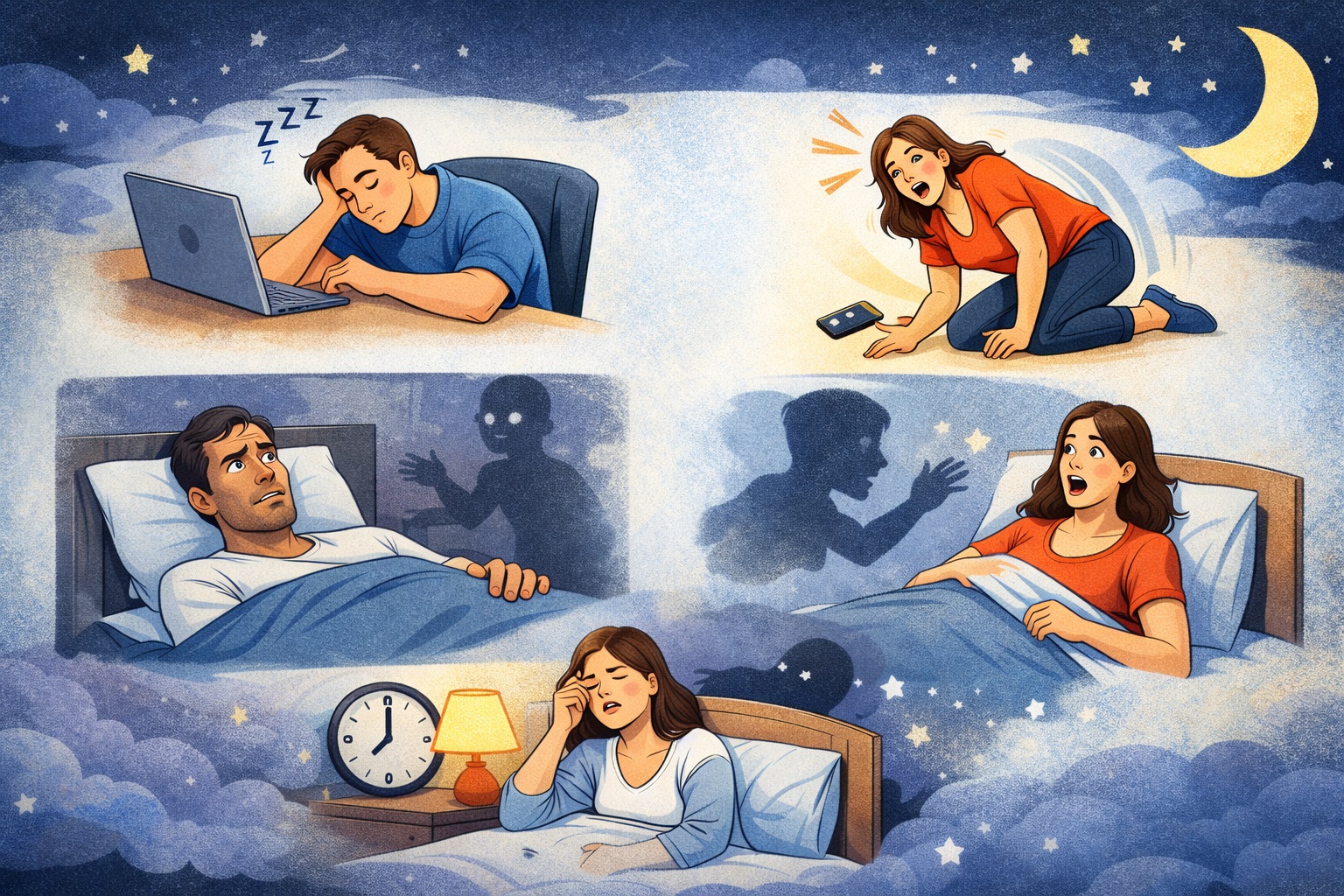
Introduction — A disorder often hiding in plain sight
Narcolepsy is frequently misunderstood as “just being tired.” In reality, it is a chronic neurological condition that disrupts how the brain regulates sleep and wakefulness. For many patients, symptoms begin subtly—misread as stress, depression, or laziness—before escalating into life-altering impairment.
In clinical settings, physicians often observe that patients live with symptoms for years before receiving a correct diagnosis. Understanding the hallmark signs is the first step toward recognition, evaluation, and effective care.
Definitions & Core Mechanisms
Narcolepsy is a disorder of sleep–wake regulation, not of sleep quantity. The brain struggles to maintain stable boundaries between wakefulness, non-REM sleep, and REM sleep. Narcolepsy is strongly linked to dysfunction of the hypocretin system, a finding consistently supported by neurobiological research published by the National Institute of Neurological Disorders and Stroke.
Most cases involve dysfunction in the hypocretin (orexin) system, a neurotransmitter network essential for sustained alertness. When hypocretin signaling is deficient or absent, REM sleep phenomena intrude into waking life—producing sudden muscle weakness, vivid dream imagery, and overwhelming sleepiness.
The Core Narcolepsy Symptoms
Narcolepsy is defined by a constellation of symptoms rather than a single complaint. Not every patient experiences all of them, and severity varies widely.
Excessive Daytime Sleepiness (EDS)
This is the universal symptom. Patients describe an irresistible urge to sleep, often peaking during passive activities like reading or meetings.
Unlike ordinary fatigue, EDS persists despite adequate nighttime sleep. Short naps may feel briefly refreshing, but alertness fades quickly.
Cataplexy
Cataplexy involves sudden loss of muscle tone triggered by strong emotions such as laughter, surprise, or anger. Episodes can range from subtle facial drooping to full collapse while consciousness remains intact.
Clinicians consider cataplexy highly specific for narcolepsy type 1, though it may appear years after initial sleepiness.
Sleep Paralysis
Sleep paralysis occurs during transitions between sleep and wakefulness. Patients are temporarily unable to move or speak, often accompanied by intense fear.
Although common in the general population, frequent or recurrent episodes raise suspicion for narcolepsy.
Hypnagogic and Hypnopompic Hallucinations
These vivid, dream-like hallucinations occur when falling asleep or waking up. They may involve voices, figures, or sensations of presence.
Because they can feel frighteningly real, patients sometimes fear they are experiencing psychiatric illness.
Fragmented Nighttime Sleep
Paradoxically, people with narcolepsy often sleep poorly at night. Frequent awakenings, vivid dreams, and restless sleep are common.
This fragmentation worsens daytime narcolepsy symptoms and complicates diagnosis.
Symptom Patterns at a Glance
| Symptom | Typical Description | Clinical Significance |
|---|---|---|
| Excessive daytime sleepiness | Sudden, uncontrollable sleep urges | Core diagnostic feature |
| Cataplexy | Emotion-triggered muscle weakness | Highly specific marker |
| Sleep paralysis | Temporary inability to move | REM intrusion sign |
| Hallucinations | Vivid dream-like experiences | REM dysregulation |
| Fragmented sleep | Frequent nighttime awakenings | Contributes to EDS |
Why Symptoms Are Often Missed
Narcolepsy symptoms overlap with depression, ADHD, epilepsy, and anxiety disorders. In adolescents, excessive sleepiness is often dismissed as poor sleep hygiene or screen overuse.
In practice, physicians frequently report that patients adapt their lives around symptoms—avoiding emotions, scheduling naps, or limiting social engagement—masking the underlying disorder.
Clinical Insights From Practice
In sleep clinics, a recurring pattern emerges: patients describe years of academic or occupational struggle before evaluation. Many are misdiagnosed with mood disorders and treated unsuccessfully.
Objective testing, including overnight polysomnography and multiple sleep latency testing, is essential. Clinical history—especially the presence of cataplexy—remains central to diagnosis.
Treatment Context & Wake-Promoting Agents
While this article focuses on symptoms, understanding treatments helps contextualize clinical recognition.
Wake-promoting agents such as Modafinil and Armodafinil are commonly prescribed to address excessive daytime sleepiness. Newer agents like Pitolisant and Solriamfetol target histamine and dopamine–norepinephrine pathways, respectively.
For patients with cataplexy, medications such as Xywav may be considered. Broader comparisons are discussed in the Eugeroic drug list, which outlines pharmacological categories without substituting for medical care.
Risks, Safety, and Side Effects
Untreated narcolepsy increases risks of motor vehicle accidents, workplace injury, and mental health strain. Social isolation and stigma are common secondary harms.
Pharmacologic treatments may carry side effects such as headache, blood pressure changes, or insomnia. Individual risk–benefit decisions should always be made with a qualified Doctor.
Use Cases, Alternatives, and Lifestyle Measures
Beyond medication, structured sleep schedules, strategic naps, and workplace accommodations significantly improve functioning. Cognitive-behavioral approaches can help patients manage anxiety linked to symptoms.
Some individuals explore adjunctive strategies discussed under Natural eugeroics or OTC eugeroics, though evidence remains limited and variable. These approaches should never replace diagnostic evaluation.
Regulatory & Diagnostic Notes (U.S.)
In the United States, narcolepsy is recognized under federal disability frameworks when functionally impairing. Diagnostic criteria are standardized and supported by national sleep medicine guidelines.
Prescription wake-promoting agents are regulated medications; their availability and legal status differ from supplements or non-approved compounds sometimes marketed online, including sites advertising options like buy modafinil. Medical oversight is essential.
Conclusion — Recognizing the Pattern
Narcolepsy is not defined by sleepiness alone but by a distinctive pattern of REM sleep instability intruding into waking life. Early recognition of symptoms—especially cataplexy and persistent daytime sleepiness—can shorten years of misdiagnosis.
With accurate diagnosis and individualized management, many patients regain safety, productivity, and quality of life.