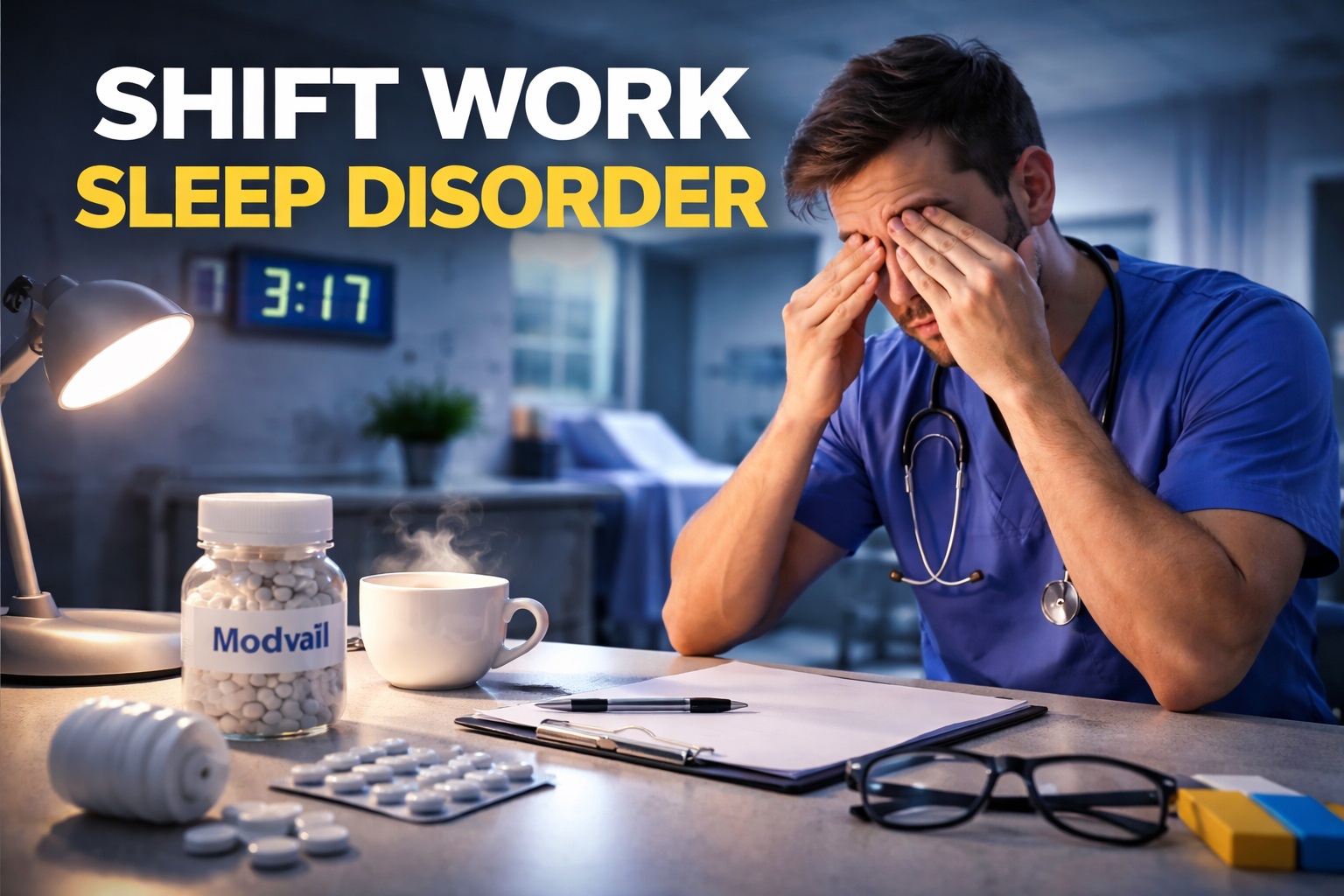
Shift work keeps modern societies running—healthcare, transportation, security—but it comes at a biological cost. When work hours conflict with the body’s internal clock, sleep becomes fragmented, alertness declines, and long-term health risks increase In the UK, the NHS recognizes Shift Work Sleep Disorder (SWSD) as a circadian rhythm condition affecting individuals who work nights, early mornings, or rotating schedules.
In clinical settings, physicians often observe that patients with SWSD don’t simply feel “tired”—they experience a persistent misalignment between their biological clock and work demands, leading to impaired performance and reduced quality of life.
What Is Shift Work Sleep Disorder?
Shift Work Sleep Disorder is a condition in which a person’s sleep-wake cycle is out of sync with their work schedule, resulting in insomnia and excessive daytime sleepiness.
The body’s internal clock—regulated by circadian rhythms—expects sleep at night and wakefulness during the day. When this rhythm is repeatedly disrupted, the brain struggles to maintain stable alertness.
According to the NHS overview of sleep disorders, circadian rhythm disruptions can significantly affect both mental and physical health, particularly in people working irregular hours.
Symptoms of Shift Work Sleep Disorder
Symptoms of SWSD often develop gradually and may be mistaken for general fatigue.
Common symptoms include:
- Difficulty falling asleep after night shifts
- Frequent awakenings during sleep
- Excessive sleepiness during work hours
- Reduced concentration and memory
- Irritability or low mood
Less obvious symptoms:
- slower reaction times
- increased risk of workplace errors
- reduced motivation
- headaches and eye strain
A clinical review published by the American Academy of Sleep Medicine on shift work disorder highlights that SWSD can significantly impair cognitive performance and increase accident risk.
Why Shift Work Disrupts the Brain
The underlying issue in SWSD is circadian misalignment.
The brain relies on environmental cues—especially light—to regulate sleep timing. Night shift work reverses these signals:
- exposure to artificial light at night suppresses melatonin
- daytime sleep occurs when the body is programmed to be awake
- irregular schedules prevent circadian adaptation
A study from Harvard Medical School on circadian rhythms and light exposure explains how light directly influences the brain’s master clock (the suprachiasmatic nucleus).
Over time, this mismatch leads to chronic sleep deprivation and unstable alertness.
Clinical Perspective: What Doctors See
In practice, patients with SWSD often present with:
- persistent fatigue despite adequate time in bed
- reliance on caffeine or stimulants
- declining work performance
- mood disturbances
Physicians typically assess:
- sleep schedules
- work patterns
- lifestyle factors
- underlying sleep disorders
Diagnosis is often based on symptom patterns rather than a single test.
Treatment Approaches (NHS-Aligned)
Managing SWSD requires a combination of behavioral strategies and, in some cases, pharmacological support.
1. Sleep Hygiene Optimization
Improving sleep quality is the first step.
Key strategies:
- maintain a consistent sleep schedule (even on days off)
- use blackout curtains to simulate night during daytime sleep
- reduce noise with earplugs or white noise
- avoid screens before sleep
2. Light Therapy
Strategic light exposure helps reset circadian rhythms.
- bright light during night shifts increases alertness
- avoiding sunlight after shifts helps prepare for sleep
Research from Stanford University Sleep Medicine on light therapy supports its effectiveness in circadian rhythm disorders.
Medications for Shift Work Sleep Disorder
When lifestyle interventions are insufficient, medications may be considered.
Wake-Promoting Agents
Eugeroics are commonly used to improve alertness during work hours.
A full overview is available in the Eugeroic drug list.
These medications work by enhancing wakefulness through dopamine and other neurotransmitter systems, without the intense stimulation of traditional drugs.
The FDA clinical review of modafinil for shift-work sleep disorder documents its effectiveness in improving alertness and reducing sleepiness during night shifts.
Sleep Aids
In some cases, short-term sleep aids may be prescribed to help individuals fall asleep during the day.
Options may include:
- melatonin supplements
- short-acting hypnotics (under supervision)
These should be used cautiously to avoid dependency or disrupted sleep architecture.
Comparing Eugeroics and Stimulants
Some individuals consider traditional stimulants for managing fatigue.
For example,
Adderall is sometimes used off-label.
However, compared to classic Stimulants:
| Feature | Eugeroics | Stimulants |
|---|---|---|
| Mechanism | Wakefulness pathways | Strong dopamine release |
| Crash | Minimal | Common |
| Addiction risk | Lower | Higher |
| Duration | Sustained | Often shorter |
This difference is important when considering long-term management strategies.
Risks and Side Effects
All treatments carry potential risks.
Common Side effects of wake-promoting medications include:
- headache
- insomnia
- anxiety
- increased heart rate
Sleep aids may cause:
- daytime drowsiness
- dependency (if misused)
Healthcare providers evaluate risks carefully before prescribing.
Practical Strategies for Shift Workers
Beyond medication, practical adjustments can significantly improve outcomes.
Daily habits that help:
- plan naps before night shifts
- limit caffeine to early in the shift
- maintain regular meal timing
- exercise regularly
Workplace strategies:
- take scheduled breaks
- use bright lighting environments
- rotate shifts forward (day → evening → night)
Many professionals use structured routines to
Get work done efficiently despite irregular hours.
Regulatory and NHS Considerations
In the UK, medications such as modafinil are prescription-only and typically reserved for clinically diagnosed conditions.
Guidance from the
NHS page on excessive daytime sleepiness emphasizes lifestyle modification as the first-line approach, with medication considered when symptoms significantly impact functioning.
Patients should always consult a qualified
Doctor before starting any treatment.
Conclusion
Shift Work Sleep Disorder reflects a deeper biological mismatch between modern work demands and human circadian rhythms.
While symptoms can be disruptive—ranging from fatigue to impaired concentration—effective management is possible through a combination of:
- structured sleep habits
- light exposure strategies
- medical treatment when necessary
Eugeroics and other therapies provide valuable tools, but long-term success depends on aligning lifestyle and biology as closely as possible.